
Quick answer
A whistle or rattle is a clue, not a diagnosis
Whistling near a vent can relate to air moving through a restriction or opening; rattling can come from a loose grille, duct support, or vibrating panel. Sounds can also travel from the furnace, air handler, or heat pump through the duct system. Note where and when the sound happens, then have the cause checked before changing ductwork or replacing equipment.
A new sound can be distracting, but the same noise can have different causes in different homes. The sound's location, changes in airflow, system mode, and inspection findings are more useful than guessing from the noise alone.
01 / Describe the sound
What can a whistle or rattle suggest?
Listen from a safe position and note whether the sound comes from one register, a return grille, an accessible duct run, or the equipment area. These patterns are useful to report, but they do not confirm a failed part.
| Sound or pattern | Possible factors to investigate | Useful detail to note |
|---|---|---|
| High-pitched whistle at a supply register | Air passing through a narrow opening, grille, damper, or restriction; register fit and system airflow may also matter. | Whether it changes with fan speed, heating or cooling mode, or a particular register. |
| Rattle at a grille or exposed duct | A loose grille, fastener, support, or sheet-metal section may vibrate when air starts or stops. | Where it is loudest and whether it begins at startup, during steady operation, or at shutdown. |
| Whistle with weak airflow or noise at several vents | A filter, return path, duct restriction, damper position, or system operating condition may be relevant. | Which rooms are affected and whether airflow has changed from its usual level. |
| Sound seems to come from the equipment | A blower, fan, panel, or other equipment component may be the source, with sound carried through the ducts. | Whether the sound is strongest at the furnace, air handler, or outdoor unit rather than at a grille. |
If the noise accompanies uneven temperatures, compare the room pattern with our guide to uneven temperatures between rooms. A sound by itself does not prove that a duct is damaged or needs replacement.
02 / Make only safe observations
What can you check before calling?
Start with visible conditions and your equipment instructions. Do not take apart grilles or ductwork, reach inside openings, or open an HVAC cabinet.
- Note which register, return grille, room, or equipment area seems loudest.
- Record whether the sound happens during heating, cooling, fan-only operation, startup, or shutdown.
- Check that furniture, rugs, curtains, or storage are not covering a supply register or return grille.
- If the filter is designed to be homeowner-accessible, check or replace it only as described in the equipment manual. Do not add a second filter or use a different type without checking the specifications.
- Make a short recording from a safe distance if it helps describe an intermittent sound. Keep away from moving fans, hot surfaces, and electrical equipment.
- Note any change in airflow, temperature, system cycling, or recent service and construction work.
A filter or blocked grille can affect airflow, but replacing a filter will not correct a loose duct support, equipment noise, or every pressure problem. Our guide to a professional duct inspection explains what a technician may examine.
03 / Know when to stop
When should you arrange service promptly?
Arrange a professional assessment if a new sound persists, grows louder, returns after a simple visible obstruction is moved, or comes with weak airflow, poor heating or cooling, repeated shutdowns, or visible duct damage.
Stop troubleshooting and keep clear if you notice a burning smell, smoke, sparks, a breaker that trips repeatedly, water near electrical equipment, or metal-on-metal contact. If it is safe and the manual allows, turn the system off at its normal control and contact a qualified HVAC professional. Do not touch wet electrical equipment or open panels.
If the noise is strongest at a furnace or heat pump rather than at a vent, the source may be equipment rather than ductwork. See common furnace noise patterns or safe observations for a noisy heat pump.
04 / Find the source
What might a technician inspect or measure?
The inspection should follow the sound and symptoms. Depending on the system and access, a qualified professional may:
- Check register and return-grille fit, visible duct supports, joints, transitions, and accessible sections for looseness, damage, or vibration.
- Look for a kinked or compressed flexible duct, an obstruction, an unintended damper position, or a restricted return path.
- Check the filter and system operating setup against manufacturer instructions.
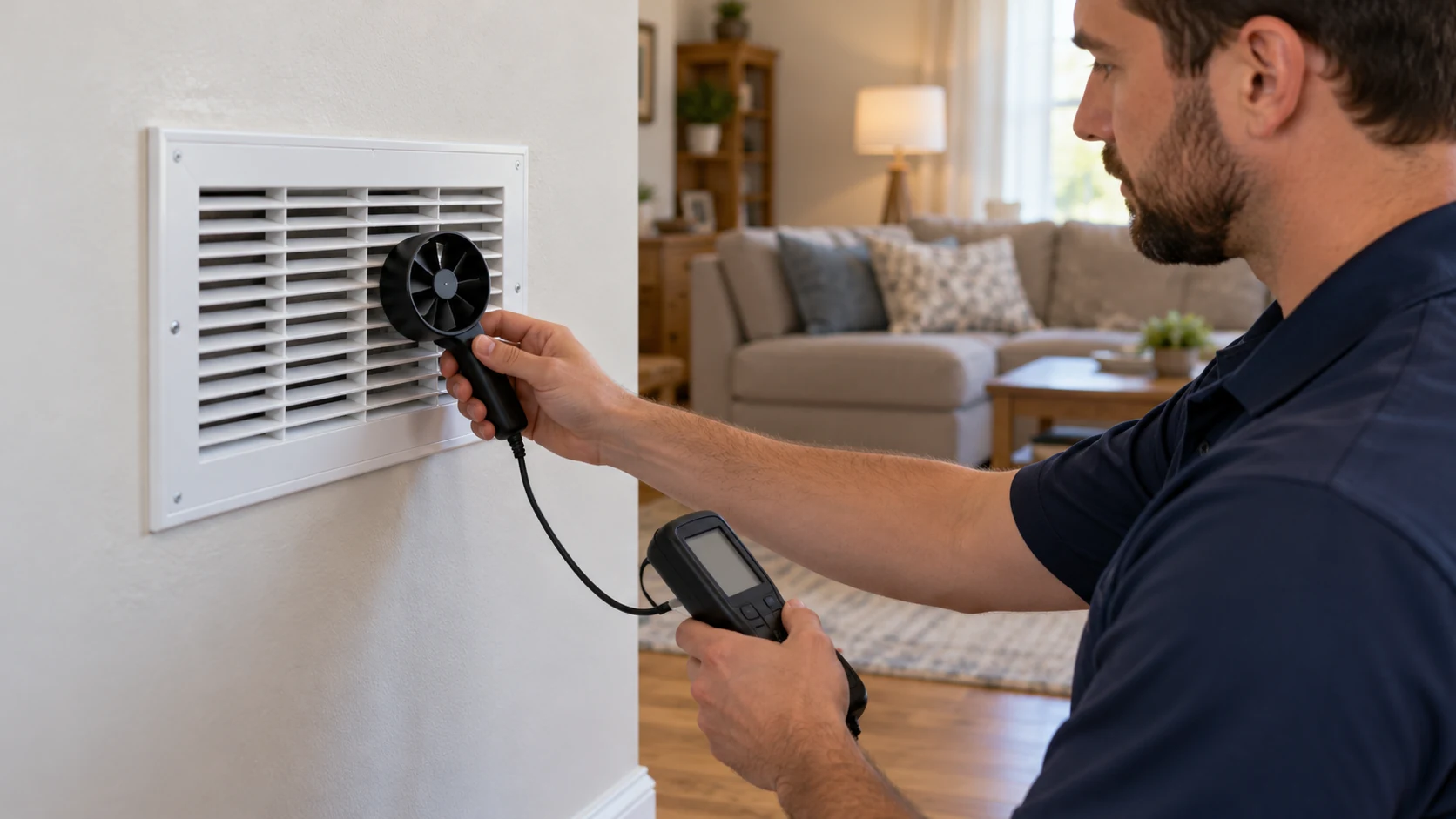
- Measure airflow or static pressure when the symptoms suggest a distribution or restriction issue, then compare readings with the system's specifications and design information.
- Inspect the blower, fan, panels, or other equipment components if the sound appears to originate at the unit.
- Run the system in the mode that reproduces the sound and document findings before recommending a repair.
Measurements need context: there is no single airflow or pressure value that applies to every system. Ask which rooms or branches were checked and what equipment or design data the technician used to interpret the results.
05 / Compare the repair
Does a noisy duct need to be replaced?
Not necessarily. A loose register or support, a correctable restriction, an airflow issue, and a damaged or poorly designed duct system call for different responses. A sound alone is not enough evidence to choose replacement.
Ask the contractor to identify the specific source, explain what was tested, and separate adjustment, repair, and replacement options in the estimate. If leakage or duct condition is part of the recommendation, our duct sealing versus replacement guide has questions to compare with the findings.
06 / Prepare your questions
What should you ask the HVAC contractor?
- Where did you locate the sound source: at a grille, in the duct run, or at the equipment?
- What did you inspect or measure, and what did the results show?
- Could a loose part, restriction, filter, return path, or system setting explain the symptom?
- What repair is included in the estimate, and what findings would make duct replacement necessary?
- Will you test the system again after the adjustment or repair to confirm the sound and airflow have changed?
- Are any recommended duct modifications compatible with the equipment and the original system design?
Frequently asked questions
Why do my vents whistle when the HVAC starts?
A whistle can occur when air moves through a narrow opening or restriction, but the sound may also come from grille fit, a damper, or equipment. Note where it is loudest and ask a technician to check airflow and system conditions.
Is a rattling sound proof that a duct is loose?
No. A grille, duct support, sheet-metal section, equipment panel, or fan component may vibrate. Sound can travel, so have the source identified before tightening or replacing parts.
Can a dirty air filter make ducts whistle?
A loaded filter may affect airflow and system pressure, but it is only one possible factor. Check it only if the manual describes a safe homeowner-accessible procedure, and arrange service if the sound persists.
Should I close a vent that is making noise?
Do not close vents as a general fix. Changing one opening can affect airflow elsewhere, and the effect depends on the system design. Keep the grille clear and ask a professional to investigate the noise.
Does duct noise mean the ductwork needs replacement?
Not by itself. Replacement should be supported by inspection findings such as damage, a design limitation, or another condition that cannot be corrected appropriately with a smaller repair.
What if the sound is loudest near the furnace or heat pump?
The source may be equipment, even if sound carries through the ducts. Tell the technician where it is loudest and when it occurs; do not open the equipment cabinet or reach near a fan.
This guide is general information. Duct layouts and HVAC equipment vary. Follow the manufacturer's instructions, keep away from moving or electrical components, and use a qualified HVAC professional for inspection or adjustments.


