
Quick answer
Duct balancing starts with measurements, not guesswork
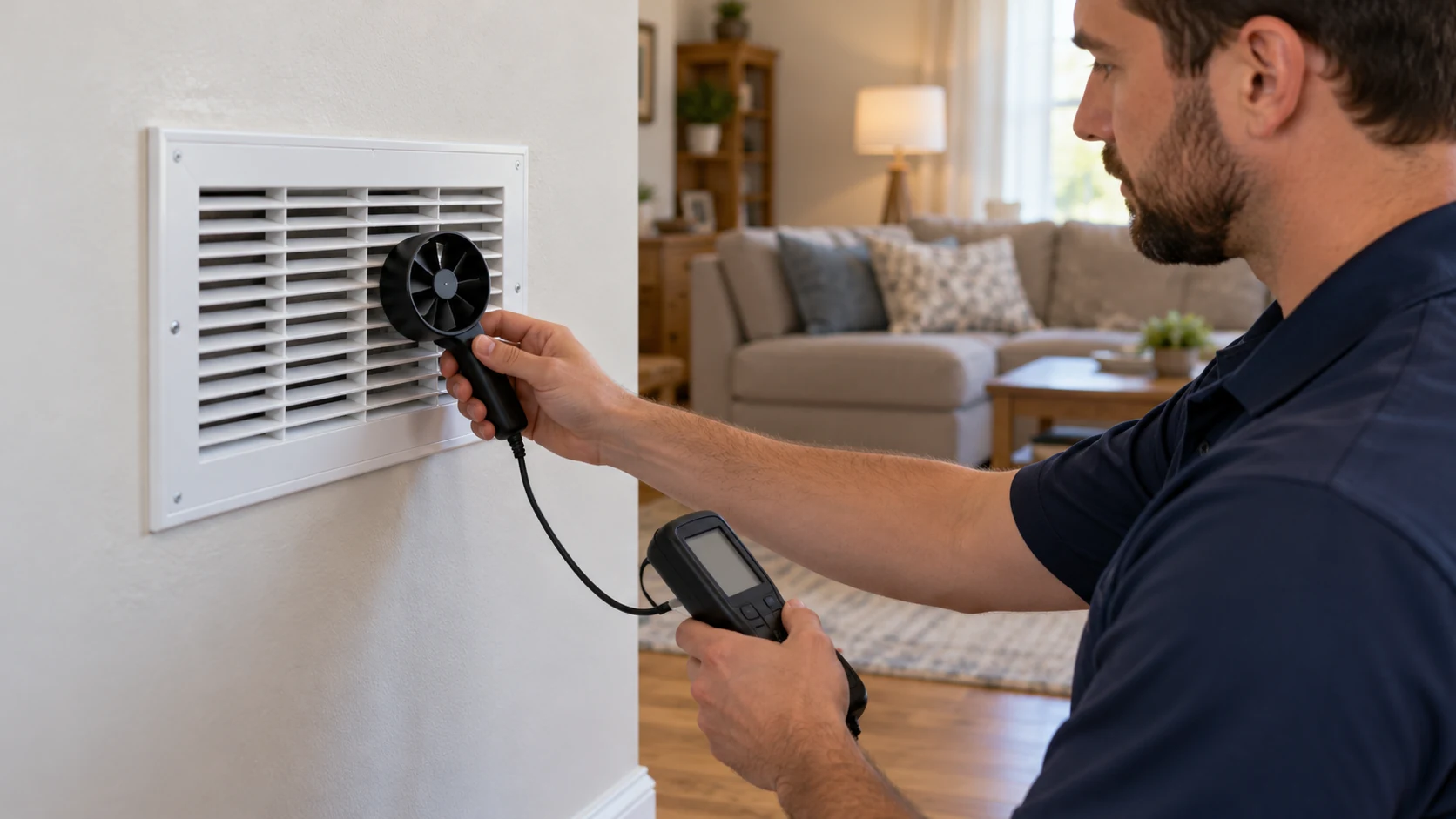
HVAC duct balancing is the process of checking and, where appropriate, adjusting airflow through a ducted system so rooms receive air in line with the system's design and operating needs. A useful visit first looks for causes such as a blocked return, a dirty filter, a duct restriction, leakage, or an equipment issue, then records measurements before and after any adjustment. Closing supply vents at random is not a substitute for diagnosis.
If one room feels stuffy while another gets too much air, balancing may be one part of the investigation. It is not a universal fix: the right next step depends on the duct layout, equipment, room conditions, and measured results.
01 / Start with the pattern
What can make airflow feel uneven?
Uneven comfort is a symptom, not proof that the ducts need balancing. A technician may consider several parts of the home and HVAC system, including:
- A supply register or return grille covered by furniture, a rug, or a curtain.
- A filter that needs attention, if the equipment manual describes it as homeowner-accessible.
- A duct that is crushed, disconnected, leaking, unusually long, or poorly routed.
- A balancing damper that is missing, inaccessible, or left in a position that does not suit the current layout.
- Equipment, fan, or coil conditions that affect the airflow available to the duct system.
- Room factors such as sun exposure, exterior walls, windows, air leakage, or a closed door with limited return-air movement.
Note which rooms are affected, whether the pattern changes between heating and cooling, and whether it is worse at a particular time of day. Our guide to uneven room temperatures covers other possible causes to consider alongside ductwork.
02 / Check the whole air path
What should be checked before changing airflow?
Balancing is most useful after the system's basic condition and the reason for the complaint are understood. Depending on the equipment and access, a qualified HVAC professional may review:
- System setup: equipment type, thermostat mode, fan setting, filter location, and any manufacturer instructions that affect the test.
- Visible air paths: whether supply registers and return grilles are open and unobstructed, and whether doors or transfer paths limit air returning from a room.
- Duct condition: accessible duct runs, connections, restrictions, leakage, insulation, and the presence and position of dampers.
- Equipment condition: whether service, repair, or cleaning is needed before airflow readings can be interpreted reliably.
- Room conditions: room use, layout, exterior exposure, and other factors that can affect comfort even when airflow is reasonable.
A duct inspection can help establish what is accessible and what needs attention. See what happens during a professional duct inspection. If the filter is the first item to review, use our HVAC filter guide and follow the equipment manual.
03 / Ask what was measured
What tests may be part of duct balancing?
The exact process varies with the equipment, duct design, and complaint. Ask the technician to explain the test conditions and how each reading informs the recommendation.
| Check or measurement | What it can help assess | Question to ask |
|---|---|---|
| Airflow at selected registers | How much air is reaching a room under the test conditions. A flow hood or other suitable instrument may be used. | Which rooms or branches were measured, and what target or design information are you comparing them with? |
| System static pressure | Pressure conditions across the air-moving system. It can help identify restrictions or operating conditions, but it is not a room-by-room airflow reading by itself. | Where was pressure measured, and how does the result compare with this equipment's specifications? |
| Duct and damper inspection | Visible leakage, damage, restrictions, or adjustment points that may affect how air is distributed. | Did you find a physical cause that should be repaired before making balancing changes? |
| Conditions before and after changes | Whether the adjustment changed airflow as intended while the system was tested in a consistent operating mode. | Can I see the readings and settings before and after the work? |
There is no single airflow or pressure number that applies to every home. Results need to be interpreted against the system's design, equipment specifications, and the conditions during the visit.
04 / Adjustment comes later
How is airflow adjusted after the cause is understood?
If measurements and inspection support balancing, the professional may adjust installed dampers or another control intended for that purpose, then repeat the measurements. If readings point to a leak, damaged duct, blocked return, equipment fault, or another issue, that correction may need to come first.
Ask for the work and any additional repairs to be itemized. A quote that only says “balance the ducts” may not explain which rooms will be measured, what changes are included, or how the result will be checked. If sealing is proposed, compare it with the condition found; our duct sealing versus replacement guide lists questions to discuss with a contractor.
05 / Prepare for the visit
What should you record and ask?
A short observation list gives the technician a useful starting point without asking you to diagnose the system.
- List the rooms that feel too warm, too cool, stuffy, or unusually noisy.
- Note whether the issue occurs during heating, cooling, or both, and whether it changes with the weather or time of day.
- Describe recent work, thermostat changes, filter changes, or furniture moved near a grille.
- Ask what will be measured, what conditions the system will run under, and what design or equipment data will guide the target.
- Ask whether the estimate includes before-and-after readings, adjustments, and a follow-up test, and whether repairs are priced separately.
- Ask the technician to explain any limitations, such as inaccessible ducts or missing design documentation.
Do not remove equipment panels, reach into ducts, move dampers, or probe electrical or mechanical parts. Follow the equipment manual for any routine homeowner checks.
Frequently asked questions
Is duct balancing the same as closing vents in unused rooms?
No. Balancing should be based on the system design and measurements. Closing vents by guesswork can alter system pressure and may leave the original cause untouched.
Does every home need duct balancing?
No. It may be considered when measurements and a comfort complaint point to uneven distribution, but some problems need duct repair, equipment service, control changes, or a home-level improvement instead.
Is static pressure the same as airflow?
No. Static pressure describes pressure conditions in the system. Airflow at a register is a separate measurement. A technician may use both, along with inspection and equipment data, to understand performance.
Should ducts be cleaned before balancing?
Not automatically. Cleaning is a separate service and should have a specific reason. A technician should explain any visible condition or airflow finding behind that recommendation before work is approved.
What should a duct balancing report include?
Ask for the areas measured, test conditions, relevant readings before and after changes, the adjustments made, and any limitations or separate repairs recommended. The format varies, but the results should be explained clearly.
Can I adjust balancing dampers myself?
Do not adjust dampers unless your system instructions identify them as homeowner controls and explain how to use them. Many dampers are intended to be set during professional testing, and their position can affect other rooms.
This article is general information for ducted HVAC systems. Equipment, duct layouts, and control designs vary. Follow the manufacturer's instructions and use a qualified HVAC professional for inspection or system adjustments.


