
Quick answer
You do not have to switch the AC off every time you leave
For a longer absence, raising the cooling setpoint can be an alternative to turning the system off completely. The right choice depends on how long you will be away, outdoor heat and humidity, the home's moisture history, pets and temperature-sensitive belongings. There is no single setting or guaranteed savings percentage for every home.
Should you turn off the air conditioner before work, or leave it running at a higher setting? Think about the length of the absence and what conditions the home needs to maintain. A thermostat schedule can reduce cooling while you are away and resume before you return, but the home and equipment determine how well that strategy works.
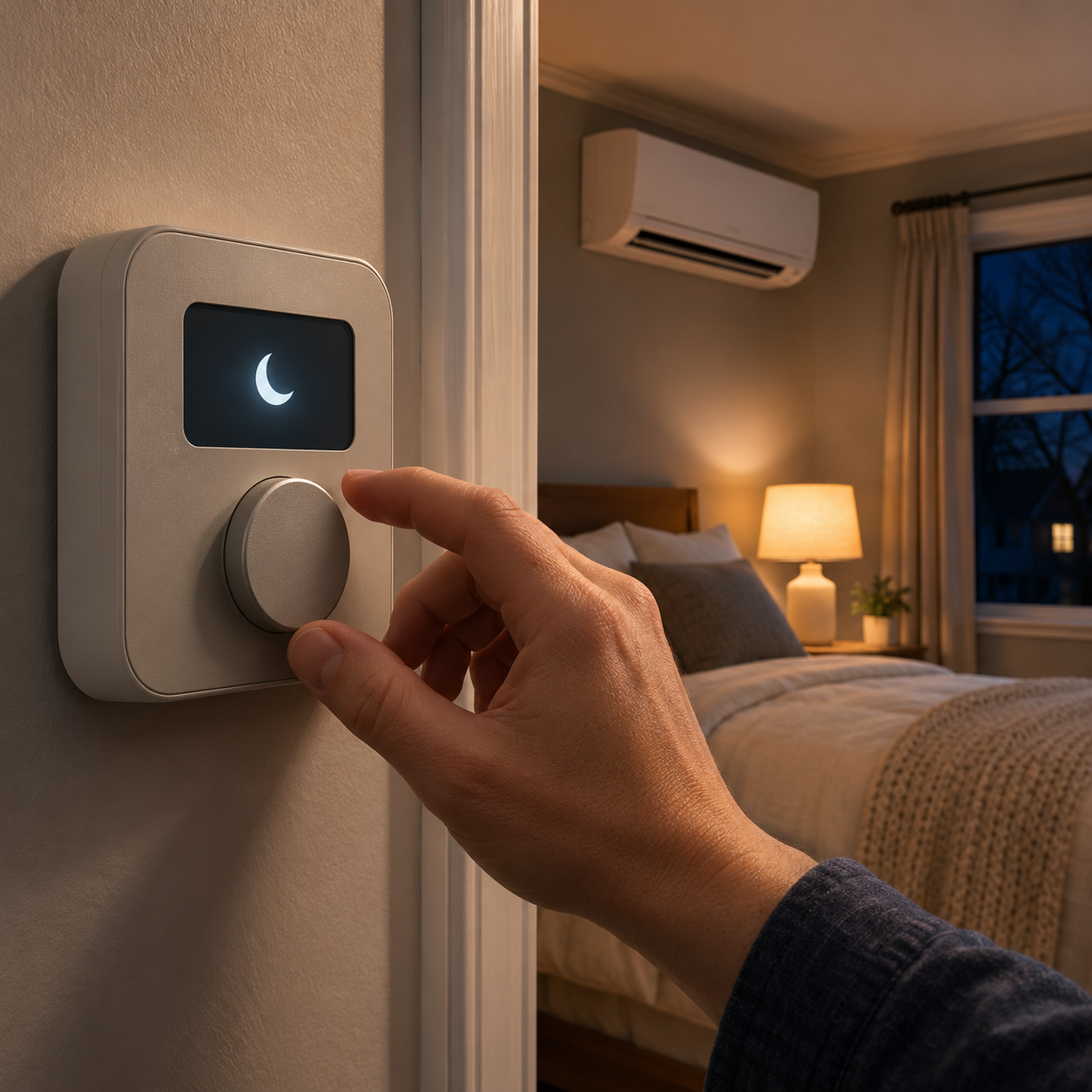
01 / Match the absence
Turn it off, or raise the setting?
Switching cooling off stops the system from responding to rising indoor temperature. An away setting lets the thermostat continue to maintain a limit while cooling less than it might during occupied hours. Which approach makes sense depends on the home's conditions and the length of the trip.
| Situation | What to consider | Before deciding |
|---|---|---|
| Brief errand | Changing the setting for a short trip may have little practical value, and comfort when you return may matter more. | Consider leaving the usual setting in place rather than making frequent adjustments. |
| Several hours away | A higher away setting or schedule may reduce cooling demand while allowing the system to respond if the home gets warmer. | Choose a setting that remains appropriate for indoor humidity, pets and belongings. |
| Overnight or longer trip | Weather, humidity, the home's insulation and any history of dampness can matter more as the absence gets longer. | Check whether the AC also helps manage moisture and whether the home needs monitoring. |
| Pets or sensitive items remain at home | Animals, plants, medicines, instruments and other sensitive belongings may need stable conditions. | Follow veterinary or product guidance and avoid settings that could compromise their care. |
02 / Account for humidity
Why do weather and indoor moisture matter?
An air conditioner removes some moisture while it runs in cooling mode, but its ability to control humidity depends on the equipment, run time, indoor conditions and how moisture enters the home. Turning cooling off for an extended period may be a poor fit for a home that already has dampness or humidity concerns, particularly during hot, humid weather.
Consider whether indoor humidity tends to rise when the AC is not running, whether there has been condensation or musty odor, and whether anyone in the home has specific comfort needs. If moisture is a concern, monitor indoor conditions and ask an HVAC professional about the system's humidity-control capabilities rather than relying on a single thermostat temperature to solve it.
Outdoor temperature is only part of the picture. Sun exposure, insulation, air leakage, windows and the home's layout affect how quickly indoor conditions change. A thermostat schedule is a starting point; pay attention to how your own home responds.
03 / Use the schedule well
How can you set an away schedule?
- Use the thermostat's schedule or away mode if it supports your system, and check that the correct cooling mode is selected.
- Set the schedule to begin when the home is unoccupied and resume with enough time for the house to become comfortable before arrival.
- Avoid setting the thermostat far below your normal target to try to cool the home faster; it does not make the equipment cool at a faster rate.
- For extended travel, consider whether remote monitoring or alerts would help you notice an unexpected temperature change or equipment problem.
- Review the equipment and thermostat manuals before using vacation, dehumidification or fan settings.
If your cooling system is a heat pump, its controls and recovery behavior can differ from a conventional AC paired with a separate heating system. See our guide to heat-pump thermostat schedules for system-specific factors.
04 / Match the home
What else should you consider before leaving?
Think about who and what will remain inside. If pets stay home, follow their care guidance and keep the home within conditions appropriate for them. Some plants, medications, musical instruments and wood furnishings also have their own temperature or humidity requirements. A general energy-saving tip should not override those needs.
Close windows and exterior doors, and use window coverings where they help limit direct sun. If you use a smart thermostat, confirm that the schedule, location and remote connection are working before relying on an away mode. Do not assume the thermostat can alert you to every equipment, power or moisture problem.
05 / Separate settings from faults
When is the thermostat setting not the problem?
If the AC runs continuously but the house does not cool after the schedule resumes, the issue may need troubleshooting rather than another setpoint change. Likewise, repeated short cycles, warning messages, water leaks or unusual sounds should not be treated as evidence that the away setting is wrong.
See what to check when an AC runs but does not cool. If the indoor temperature is changing rapidly or the system is cycling unusually, describe what you observe and when it happens to a qualified service provider.
Frequently asked questions
Should I turn off the AC when I leave for work?
There is no universal answer. For a longer workday, some households use a higher away setting instead of switching cooling off, especially if indoor humidity, pets or sensitive belongings are a concern. Consider your local weather and how your home behaves.
Is it better to raise the thermostat or turn the AC off?
Raising the cooling setpoint can limit cooling while still letting the thermostat respond to a rising indoor temperature. Turning the AC off stops cooling altogether. The choice depends on the absence length, indoor moisture, outdoor conditions and household needs.
What temperature should I set while I am away?
No single temperature fits every home. Choose a setting based on local heat and humidity, the home's insulation and moisture history, the system's controls, and any pets or belongings that need specific conditions. Follow equipment guidance where applicable.
Will turning off the AC save a specific amount of energy?
Not a predictable amount for every household. Energy use varies with the weather, length of absence, building, equipment, thermostat schedule and utility rates. Compare your own usage over similar conditions rather than relying on a fixed savings claim.
Should I leave the AC on if my home gets humid?
If the home has a history of high humidity, condensation or dampness, switching the AC off for a long period may reduce moisture removal. Monitor indoor conditions and ask a qualified professional about humidity control for your home and system.
This article is general information, not a fixed thermostat prescription or energy-savings estimate. Follow the equipment and thermostat manuals, and consider the needs of people, pets and belongings in the home.


