
Quick answer
Compare your ducts, room layout, zoning needs and heating plans
Central AC distributes cooled air through ductwork, while a ductless mini-split delivers air through one or more indoor units connected to an outdoor unit. Mini-splits can provide both cooling and heating when the specific model is a heat pump. The better fit depends on the home and installation conditions, so compare a room-by-room design and itemized estimates rather than choosing by system label alone.
Replacing an older air conditioner or adding comfort to a renovated room can bring up two very different installation paths. Existing ducts, room boundaries, equipment location and whether you want the system to heat all affect the comparison. This guide lays out the questions to resolve before choosing between central air conditioning and a ductless mini-split.
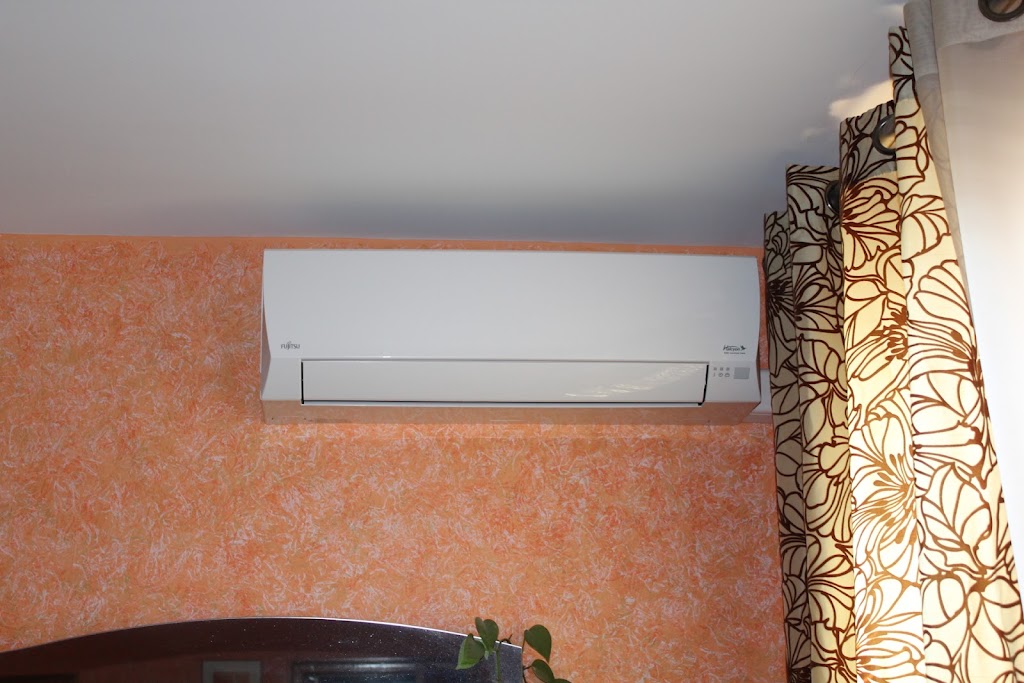
01 / The basic difference
How do central AC and ductless mini-splits work?
Both system types move heat from indoors to outdoors during cooling, but they distribute conditioned air differently.
| Consideration | Central AC | Ductless mini-split |
|---|---|---|
| Air delivery | Uses supply and return ductwork to distribute cooled air through the home. | Uses one or more indoor units connected to an outdoor unit; it does not need air ducts to serve those zones. |
| Room control | Often managed as one main system. Separate control between rooms depends on the design and any zoning equipment. | Can provide room or zone control when the system has appropriately selected indoor units and controls. |
| Indoor equipment | Cooling equipment is commonly paired with an indoor coil and air handler or furnace blower; much of the distribution is concealed. | Indoor heads are visible on a wall, ceiling or other approved location and need access for filter care. |
| Heating | Central AC provides cooling. Heating generally comes from separate equipment such as a furnace or boiler. | Some mini-splits are heat pumps that can heat and cool. Confirm the selected model's heating mode, capacity and cold-weather operating range. |
| Installation needs | Requires suitable ductwork and a compatible path for the indoor and outdoor components. | Requires suitable locations for indoor units and outdoor equipment, plus routes for refrigerant lines, condensate drainage and electrical connections. |
02 / Look at the house
When does existing ductwork matter?
If the home already has ducts, a contractor should assess their condition, layout, sizing and airflow before assuming central AC is a straightforward replacement. Leaks, restricted returns, poor balancing or damaged insulation can affect comfort and may add work to the project. A new cooling system does not automatically correct a duct problem.
Where ducts are absent, hard to reach or do not serve an addition, a ductless system may be one option to discuss. That does not make it an automatic fit: the number and location of indoor units, refrigerant-line route, drainage, electrical capacity and outdoor-unit location all need planning.
If some rooms are already much warmer or cooler than others, describe which rooms are affected and when. See possible causes of uneven temperatures between rooms and what happens during a professional duct inspection.
03 / Match the layout
How do room layout and zoning affect the choice?
Central AC is often planned to serve several rooms through the duct system. Whether that produces even comfort depends on the duct design, airflow, thermostat location and how the home is used. A single thermostat reading may not reflect conditions in every room.
A multi-zone mini-split can give separate control to selected areas, but each indoor unit serves the spaces that can receive its air. Closed doors, room shape, ceiling height and the location of each head matter. Ask the installer to show which rooms each unit is expected to serve and how the system will be controlled.
For either option, request a load calculation and equipment selection that account for the home's actual conditions. Square footage alone does not show how many zones are needed or what capacity each space requires. Our guide to questions about heat-pump sizing and installation estimates covers design details worth discussing with an installer.
04 / Include heating in the comparison
Can a ductless mini-split also heat the home?
Many ductless mini-splits are air-source heat pumps and can provide both cooling and heating. Some equipment is cooling-only, so verify the exact model rather than relying on the term “mini-split.” If it is a heat pump, ask for its heating capacity and performance at the outdoor temperatures relevant to your area, and discuss whether existing or supplemental heat will remain in use.
Central AC itself does not provide heat. It may share an air handler or blower with a separate furnace, while a boiler may heat the home through radiators or another distribution system. If replacing or supplementing heating equipment is part of the project, compare those options separately. Read how homeowners in New York can compare heat pumps and furnaces and why a heat pump may run during cold weather.
05 / Plan the installation
What should you compare in contractor estimates?
Ask each contractor to describe the proposed system and work in comparable terms. An equipment-only price may not include the same work as a complete installation estimate.
- What load calculation and room-by-room assumptions were used to select equipment capacity?
- For central AC, what condition are the ducts in, and are duct repairs, returns, balancing or insulation included?
- For a mini-split, how many indoor units are proposed, which rooms will each serve, and where will they be placed?
- Where will outdoor equipment, line sets and condensate drains go? Are electrical upgrades or permits included?
- If heating is expected, what is the exact model's heating capacity and operating range, and what role will existing heat play?
- Does the estimate list equipment, installation labor, removal, permits, commissioning, warranty terms and exclusions?
- Will proposed changes or repairs be priced and approved before work beyond the written scope begins?
Request an itemized written estimate from qualified contractors and compare the design, included work, warranty and exclusions along with the price. Actual permit and installation requirements depend on the property and local rules.
Frequently asked questions
Is a ductless mini-split the same as central AC?
No. Central AC distributes cooled air through ductwork, while a mini-split uses one or more indoor units connected directly to an outdoor unit. Both can cool a home, but their installation needs and room-control options differ.
Can every ductless mini-split provide heat?
No. Many mini-splits are heat pumps that provide heating and cooling, but some models may be cooling-only. Check the exact model specifications and ask the installer about heating capacity and low-temperature performance.
Can one mini-split cool an entire house?
It depends on the home and system design. A multi-zone system may serve several areas, but unit placement, room boundaries, airflow paths and sizing determine what spaces can be conditioned effectively. Ask for a room-by-room explanation of the proposed design.
Is central AC always less expensive if my home has ducts?
No single rule applies. Existing duct condition, equipment compatibility, installation access, electrical work, zoning and the number of mini-split units can all affect an estimate. Compare complete written scopes for your home.
Do I need to replace my furnace to install a heat-pump mini-split?
Not necessarily. A heat-pump mini-split may be considered as a supplemental or separate system, but how it works with existing heat depends on the equipment, controls, home layout and design goals. Ask the contractor to explain the intended operation and backup-heat plan.
This guide is general information, not a system design or installation recommendation. Equipment selection, electrical work, refrigerant piping and permits should be assessed by qualified professionals under applicable local requirements.


